Depth of Field is something that, generally, is applied to photographers. However, it's interesting to look at when you apply it to master artists' work. It's also interesting to think about for your own art and contemplate just how the eye works and what it's really seeing.
Depth of Field refers to the depth that the person looking at a scene is focusing on. The eye is incredible, when you really think about it, because it focuses on different things in a scene so quickly that you don't really notice that you're quickly focusing on things that are very near you then very far away from you. But if you really look at what you're seeing, you'll notice that the stuff that you're not focusing on is blurry.
It's the blur, or what is not in your focus, that I'm interested in. For a while, it was considered "all the rage" to play with "Tilt Shift Focus" settings on some great works of art. Wet Canvas took it a little further and explained what was really going on with the concept by applying Depth of Field concepts to it.
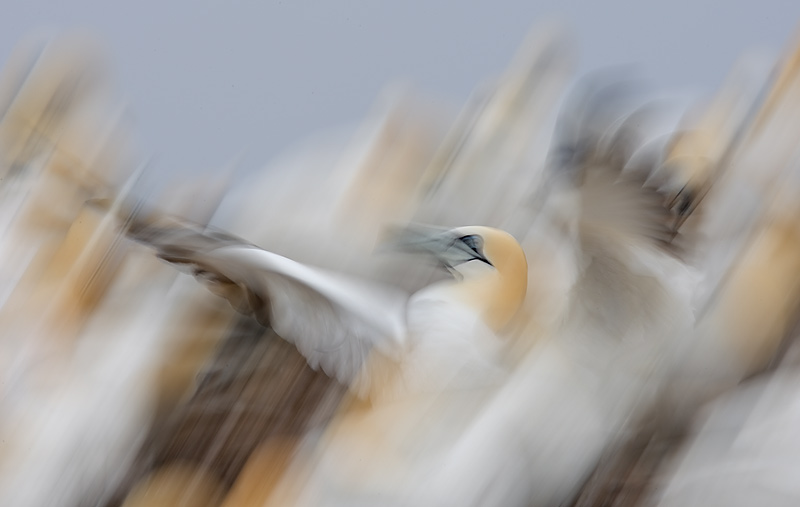
What I think is so interesting about Depth of Field is that photographers try to capture what the artists' eye does. An canvas-type artist (one who works in two dimensions, or flat, but tries to create a three dimensional piece of art through the use of shading and optical illusions) puts their entire scene in focus. There's no "blur" in a painting, just less features. The paint doesn't actually "blur," though. Ink and pencil work also utilizes the idea of blur, but doesn't actually blur them.
It certainly makes you wonder what a blurred painting would look like! Perhaps that's where abstract originated from!
Showing posts with label tutorial. Show all posts
Tuesday, November 27, 2012
Monday, November 26, 2012
It's all about Perspective
Drawing in the right perspective can be tough unless you've got a "formula" or a "recipe" for how to do it. Ever wonder how artists, architects, and engineers get a drawing to look more like real life than a drawing? It's all about perspective. Are you looking from a worm's view, bird's view, dog's view, mouse's view, or a human's view? There's so many different ways to look at the world!
Generally speaking, there's three "point" perspectives: Single, Double, and Triple. With Single Point Perspective, you pick a point on your horizon. All lines going up and down go up and down perfectly straight. All the other lines, however, meet together at that one point, also in a straight line. It's sort of strange when you're drawing it, but when it's all finished up, it looks right. :)
Double Point Perspective follows the same idea, but you split your image in two. So, you pick two points on the horizon you've chosen, then decide where the middle of your piece of art will be. All horizontal lines that are on the left of the middle come together at the horizon dot on the left. All horizon lines on the right of your image meet at the spot on the right.
Three Point Perspective is where you start getting into who's view of the world you're looking at. Basically, the difference between Double Point and Triple Point is that the vertical lines (the ones going up and down) don't go up and down, they meet at a tertiary point. If that point is in the sky, the point is called the zenith. But if it's in the Earth, it's called a nadir.
Bob Ostrom, on Jerry's Artarama made a video to teach a good way to do it: Three Point Perspective.
| Image from http://www.watercolorpainting.com/perspective_1_2_3_point.htm |
Generally speaking, there's three "point" perspectives: Single, Double, and Triple. With Single Point Perspective, you pick a point on your horizon. All lines going up and down go up and down perfectly straight. All the other lines, however, meet together at that one point, also in a straight line. It's sort of strange when you're drawing it, but when it's all finished up, it looks right. :)
| Image from http://www.watercolorpainting.com/perspective_1_2_3_point.htm |
Double Point Perspective follows the same idea, but you split your image in two. So, you pick two points on the horizon you've chosen, then decide where the middle of your piece of art will be. All horizontal lines that are on the left of the middle come together at the horizon dot on the left. All horizon lines on the right of your image meet at the spot on the right.
| Image from http://www.watercolorpainting.com/perspective_1_2_3_point.htm |
Bob Ostrom, on Jerry's Artarama made a video to teach a good way to do it: Three Point Perspective.
Monday, November 19, 2012
Creating Night time pictures
Ever wonder how to make cool images like this one, where you can see the night sky, the hills in the background, *and* the stuff in the foreground?
Just follow the directions on this instructable and you'll be able to do it, too! You'll need your camera and you'll need either Gimp or Photoshop so you can put the picture together.
Once you see how it's done, it's hard to look at the world the same way!
Thursday, November 15, 2012
Strathmore 2013 Online Workshop Series!
This was sent to me in my email the other day. I thought I'd share!
|
Tuesday, November 13, 2012
Hair Tutorial: Braids
Every try to draw a braid? I have, but it was on my self-portrait as a Sophisticated Stick. My "braids" were just Xs one under the other. On a stick figure, that works! See:
But if you want to get nice braids on a drawing you're trying to get a little more realistic on, try this method:
Wednesday, October 24, 2012
Doodles & Zentangles Tutorial
Zentangles are some of the coolest things around, I think. I'm not Zen enough to do them, it seems, because when I start one, they always end up being just scribbles. ::sighs:: I suspect that the way to get good at Zentangles is practice. Ugh. My Practice Patience life-lesson is rearing it's head again.
Regardless, there's some people out in the world (like my nephew and my Aunt Cyd), who just naturally are Zentanglists. They both did those types of doodles long before "Zentangle" was even thought of. However, for those of us (me), who just can't seem to find the Zen to get it done, I've found several tutorials for us. This one shows an interesting series of tangles *and* it shows how to do the shadows so the tangle looks a little more 3D.
Tuesday, October 16, 2012
Free Video Art Creation Tutorials
I'm one of those monkey-see monkey-do sort of people when it comes to art. At least initially! I like to be able to watch someone doing their own art and have them explain why they're doing what they're doing and when they're doing it.Sometimes, I even want to know why they're doing it that particular way.
With that in mind, I've got a resource to share with you for a lot of different tutorials showing how to create art with different mediums. Videos are awesome... They're out at ArtTutor.com.
Subscribe to:
Posts (Atom)
